WIHM DESIGN & CONSTRUCTION is a full-service / turnkey projects renovation company. We embrace a client-centric approach, while delivering best in class construction and craftsmanship. Working since 2009 in the industry our work truly exceeds the expectation of any homeowner’s desires.



Most home renovation projects that go over budget, run past deadline, or end in frustration between homeowner and contractor share a common root cause: the planning phase was either skipped, rushed, or treated as something that happens at the start rather than something that governs the entire project.
Planning a home renovation in Quebec is not simply a matter of deciding what you want and calling a contractor. It involves understanding how to define scope, how to build a budget that reflects reality rather than optimism, how Quebec’s specific permit and licensing requirements apply to your project, how to evaluate contractors fairly, and how to structure the contract and timeline so that everyone is accountable to the same set of expectations.
This guide covers the complete process, step by step, with the practical specificity that most general renovation guides leave out.
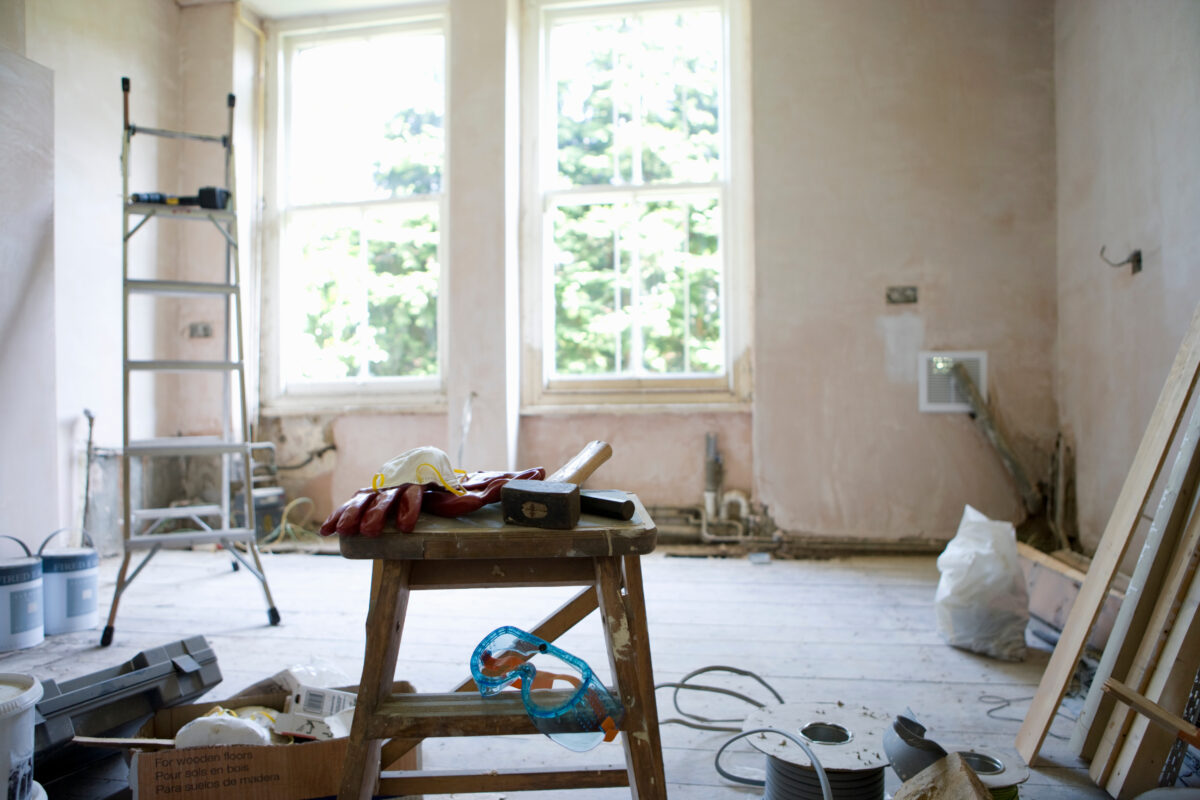
Define Your Scope Before You Do Anything Else
The scope of a renovation is the precise definition of what is being built, changed, or removed. It sounds like a simple thing to establish, and yet undefined or poorly defined scope is the single most common source of cost overruns, project delays, and contractor disputes in residential renovation.
What Scope Definition Actually Means
Scope definition is not ‘we want to redo the kitchen.’ It is a description specific enough that two different contractors, reading it independently, would price essentially the same project. That description includes which rooms are in scope and which are not, what structural changes are included, what the finish level is (standard builder-grade versus mid-range versus high-end custom), which trades are involved (plumbing, electrical, HVAC, structural), and whether design services are included or separately contracted.
Without that specificity, contractors will quote different versions of your project, and you will spend weeks trying to compare quotes that are not actually comparable. Worse, a vague scope means that everything is subject to interpretation once construction begins, which is where ‘change orders’ are born and where budgets collapse.
How to Develop Your Scope
Start by walking through every area of the renovation and describing in writing what you want to achieve. Use photographs, Pinterest boards, or magazine references to communicate finish quality and style preferences. Then work through these questions for each element:
- What is being demolished or removed?
- What is being rebuilt or added?
- What materials and finishes are being specified, or what quality range are they in?
- What mechanical systems (plumbing, electrical, HVAC) are affected?
- Are there structural changes involved?
- What is explicitly out of scope, even if adjacent to the renovation area?
For complex projects, having a designer or architect develop a set of drawings before you approach contractors converts this conversational scope into a documented specification. That documentation is the foundation of every other planning step that follows.
When Scope Creeps
Scope creep is what happens when the project gradually expands beyond its original definition, usually in small increments that each feel reasonable in isolation but together add significantly to cost and time. The most effective protection against scope creep is a well-defined original scope combined with a clear change order process in the contract that requires written authorization before any out-of-scope work begins. WIHM Renovation’s client-centric approach to project management treats scope documentation as the foundation of a project where both parties have clear expectations from day one.
Set a Realistic Budget With Contingency Built In
Most homeowners begin a renovation with a number in mind that represents what they hope the project will cost. This number is almost always lower than what the project will actually cost, not because contractors are dishonest but because the true cost of a renovation includes more than the obvious line items, and because conditions discovered once construction begins frequently require additional work.
What Your Budget Actually Needs to Cover
A complete renovation budget includes design and architecture fees if applicable, permits and inspection fees, contractor labour, materials and finishes, the cost of temporary accommodation if you need to vacate during construction, storage costs if furniture and belongings need to be moved, and the contingency reserve. Every item on this list needs a realistic number, not a placeholder.
The Contingency Calculation
The contingency reserve is not optional and it is not a sign that you are planning for failure. It is an acknowledgment that renovations, particularly in older Quebec housing stock, routinely reveal conditions that could not be anticipated from a visual inspection: water damage behind walls, outdated wiring that does not meet current code, deteriorated structural elements, or the presence of materials requiring remediation. Ten percent of the total project budget is a minimum contingency for a straightforward renovation in a newer home. Fifteen to twenty percent is more appropriate for older homes or projects involving structural work.
The homeowners who are most satisfied at the end of a renovation are almost always the ones who built a realistic contingency into their budget from the beginning. The ones who are most dissatisfied are almost always the ones who started with a number they could not exceed and discovered that the real cost was different.
Getting Accurate Pricing
The only way to get accurate pricing is to give contractors a well-defined scope and let them quote against the same specification. Three quotes is the minimum for a project of meaningful scale. Before comparing quotes, verify that all three are covering the same work: a quote that is significantly lower than the others has almost always excluded something. Ask each contractor to walk you through their quote line by line and explain any items that appear different across quotes.
Understand Quebec’s Permit and Licensing Requirements
Quebec has specific and well-enforced requirements governing who can perform renovation work and what work requires municipal permits. Understanding these Quebec’s licensing requirements before you start is not optional, and skipping them exposes you to genuine legal and financial risk.
The RBQ License Requirement
In Quebec, contractors performing construction work must hold a valid license from the Régie du bâtiment du Québec (RBQ). This is not a voluntary certification; it is a legal requirement. An unlicensed contractor in Quebec is operating illegally, and hiring one as a homeowner creates its own liability: work performed by an unlicensed contractor may not be covered by the Quebec New Home Warranty Plan (GCR), may void your home insurance, and may complicate the sale of your home. Always verify a contractor’s RBQ license number on the RBQ’s public registry before signing any agreement. WIHM Renovation holds RBQ license 5782-3676-01.
The RBQ license is also category-specific. A general contractor license allows a contractor to manage all trades on a project. Specialized contractors hold licenses for specific categories of work. Make sure the license held covers the scope of work being proposed.
When Permits Are Required
In Quebec, permits are required for a broad range of renovation work. The specific requirements vary by municipality, but in general, permits are required for:
- Any structural modifications, including the removal or addition of load-bearing walls
- Additions or changes to the building’s footprint or roofline
- Significant electrical work, including the addition of new circuits, panel upgrades, or modifications to service entrance
- Plumbing work that modifies drain, waste, or vent systems
- HVAC work that involves new ductwork or equipment installation
- Basement finishing that creates new habitable space
- Construction of decks and solariums above specified dimensions
Surface-level work, including painting, flooring replacement, cabinet replacement, and tile work, generally does not require a permit, though replacing fixtures that connect to existing plumbing or electrical systems may require one depending on the municipality. When in doubt, contact your municipal building department before starting. A permit is always cheaper than the consequences of building without one.
Montreal and West Island Specifics
Montreal’s various boroughs each have their own building departments and specific requirements, particularly for properties in heritage areas. West Island municipalities including Beaconsfield, Kirkland, Dollard-des-Ormeaux, Pointe-Claire, and Pierrefonds-Roxboro each process permit applications independently and have their own submission requirements, fees, and processing timelines. A contractor experienced with the specific municipality where your project is located is a significant advantage in navigating this efficiently.
Find and Evaluate Contractors The Right Way
The contractor you choose is the single most important factor in whether your renovation succeeds. A great design poorly executed produces a disappointing result. A reasonable design executed by a skilled, organized, honest contractor produces a home you will enjoy for years. Evaluating contractors rigorously before signing a contract is time well spent.
Sources for Finding Qualified Contractors
The most reliable sources for contractor referrals remain personal recommendations from people who have had work done. Ask friends, family, and neighbours in your area who they have used for similar projects and whether they would hire them again. A contractor who has successfully completed a project similar to yours in your neighbourhood is a meaningful signal.
Professional referral sources include architects and designers who regularly coordinate construction, real estate professionals who work in your area, and supply companies who know which contractors use quality materials and pay their accounts. Online review platforms are a secondary source; be skeptical of contractors with exclusively five-star reviews and no critical feedback, and look for reviews that describe the project process rather than just the final result.
What to Verify Before Getting a Quote
- RBQ licence number: verify on the RBQ public registry at rbq.gouv.qc.ca
- CCQ (Commission de la construction du Québec) compliance: all tradespeople on the project must hold valid CCQ cards for their trade
- General liability insurance: minimum $2 million is standard; ask for a certificate naming you as additional insured
- Workers’ compensation coverage (CNESST): protects you from liability if a worker is injured on your property
- References from similar projects: completed within the last two years, in your area, at a similar project scale
What to Ask in the Evaluation Process
When meeting with potential contractors, ask specific questions that reveal how they manage projects, not just how well they can sell them. How do they handle unforeseen conditions discovered during construction? What is their process for change orders? Who will be the day-to-day site supervisor? What are their payment terms and do they require large deposits upfront? How do they communicate with homeowners during a project?
A contractor who answers these questions clearly and confidently, with specific references to their process rather than general assurances, is demonstrating the organizational competence that actually determines whether a project goes well. Vague answers to process questions are a warning sign regardless of how good the portfolio looks.
The Design Phase: Why It Comes Before Construction, Not During
One of the most common and costly planning mistakes in home renovation is treating design as something that can happen simultaneously with construction, or that can be ‘figured out as we go.’ Design decisions made under the time pressure of an active construction site are almost always more expensive and less satisfying than the same decisions made at the drawing table.
What the Design Phase Produces
For a kitchen renovation, the design phase produces a detailed layout drawing showing the position of every element (cabinetry, appliances, fixtures, outlets, lighting), elevations showing the wall treatments, a material and finish specification with specific product selections, and a drawing package that the contractor can price and build from with minimal ambiguity. For a bathroom, the same level of documentation applies to every fixture, tile layout, fixture placement, and plumbing rough-in location.
This documentation is not just for the contractor. It is for you. Having a complete design in hand before construction starts means you have seen and approved what your renovation will look like before anyone has spent a dollar on materials. Changes at the design stage are free. Changes after cabinets have been ordered or rough-ins have been completed are expensive.
Integrated Design and Construction
WIHM Renovation offers integrated design services as part of its project approach, which means that the design and construction planning happen with the same team rather than requiring you to coordinate between a separate designer and a contractor who may have different assumptions about how the design translates into construction. This integration produces drawings that reflect both design intent and construction reality, reducing the gap between what was designed and what gets built.
Material Lead Times in Quebec
Material lead times are a planning factor that regularly surprises homeowners. Specialty tile, custom cabinetry, certain plumbing fixtures, and custom millwork can have lead times of eight to sixteen weeks or longer. If the design phase is not completed far enough in advance of construction, materials are not ordered in time, and the construction schedule either waits for delivery or proceeds without the specified materials, requiring substitutions that may not reflect the original design intent.
Contracts: What Your Renovation Contract Must Include
A renovation contract that does not contain specific, enforceable terms is not a contract that protects you. It is a document that creates the appearance of agreement while leaving the important questions open to interpretation. Quebec law provides certain protections for consumers, but those protections are most useful when the contract itself is well constructed.
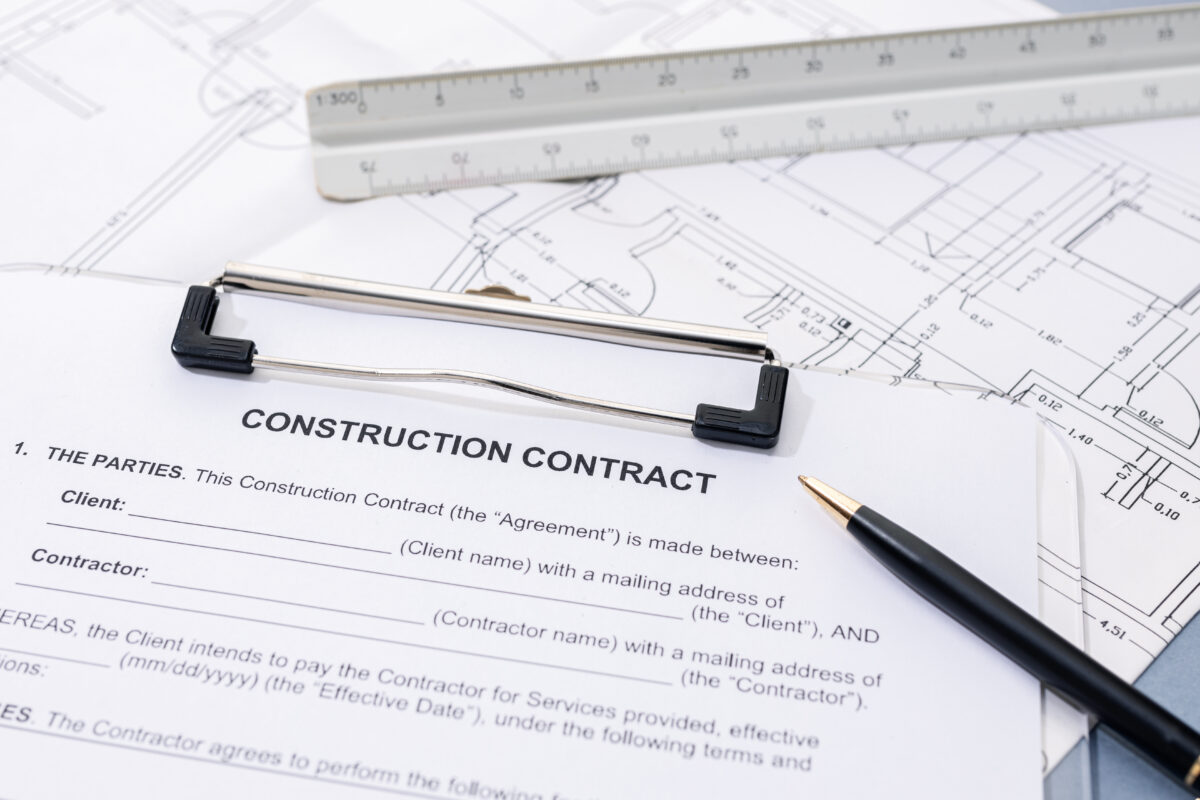
Construction contract and pen on table. Real estate and planning of building a house or project home
Essential Contract Elements
- Full scope description: what is included and, explicitly, what is not
- Detailed price breakdown: labour and materials separated, with allowances for owner-supplied items specified
- Payment schedule: tied to construction milestones, not calendar dates; typically deposit, rough-in complete, drywall complete, substantial completion, final holdback
- Start and substantial completion dates: with provisions for extensions due to permit delays, material supply issues, or owner-directed changes
- Change order process: written authorization required before any out-of-scope work begins; change orders to specify cost and schedule impact
- Warranty terms: minimum one year on workmanship; material warranties as specified by manufacturers
- Contractor’s RBQ and CCQ information
- Insurance certificate references
- Dispute resolution process
Payment Schedule Principles
Never pay a large upfront deposit for a renovation project. In Quebec, it is not standard practice for a homeowner to pay more than 10-15 percent of the total project value at signing. A contractor demanding 50 percent or more upfront is a red flag regardless of the explanation offered. Payment should progress as work progresses, with a holdback (typically 10 percent of total contract value) retained until final inspection and deficiency correction are complete.
The Holdback and Its Purpose
The final holdback is the most important contractual protection a homeowner has. It ensures that the contractor has financial motivation to return and complete deficiencies and to obtain the final permit inspection sign-off. Release the holdback only when the work is genuinely complete, all inspections have passed, and you have received all warranty documentation and equipment manuals.
Planning Your Renovation Timeline
Renovation timelines vary significantly by project type, size, and complexity. The table below provides a general reference framework. The durations shown assume a well-planned project with permits and materials in order before construction begins; inadequate planning typically adds weeks or months to each phase.
| Phase | Typical Duration | What Happens |
|---|---|---|
| Planning and design | 4-8 weeks | Scope definition, budget development, design drawings, permit preparation |
| Permitting | 2-8 weeks | Varies by municipality and project complexity; structural work takes longer |
| Pre-construction | 1-2 weeks | Site protection, material ordering, utility coordination, demolition prep |
| Structural / rough-in | 2-6 weeks | Framing, plumbing rough-in, electrical rough-in, HVAC; inspections at end |
| Finishing | 3-8 weeks | Insulation, drywall, flooring, cabinetry, tile, fixtures, painting, trim |
| Final inspection and handover | 1-2 weeks | Final permit inspection, deficiency list, client walkthrough, warranty documentation |
Seasonal Timing in Quebec
Quebec’s climate affects renovation planning in specific ways. Exterior work (decks, solariums, extensions involving new exterior openings) has a practical season from approximately mid-April to mid-November. Interior work is not season-dependent for quality purposes, but the fall and winter months see heavier contractor demand as exterior projects wind down, which can affect scheduling availability and lead times.
Starting the planning process in the fall for a spring renovation, or in late winter for a summer project, gives you adequate time to complete design, obtain permits, and secure a qualified contractor without competing with the peak spring rush.
Living Through the Renovation
For projects that affect living spaces, plan your accommodation around the construction phases rather than around an optimistic completion date. Identify which phases are genuinely disruptive (kitchen demolition, bathroom replacement, major structural work) and plan for those phases specifically. A kitchen renovation that takes four weeks does not mean four weeks without a functioning kitchen; with proper phasing, you may have reduced functionality for part of that time and full disruption for a shorter period. Discuss phasing explicitly with your contractor.
The Complete Pre-Construction Checklist
Use the checklist below to verify that your renovation project is genuinely ready to begin before signing a construction contract or authorizing mobilization. Each item that is not complete represents a risk that will surface during construction.
Scope and Design
- Written scope document completed and reviewed
- Design drawings or specifications completed for all in-scope areas
- Material and finish selections made and specified (no open allowances for major items)
- Material lead times confirmed; long-lead items ordered
- All owner-supplied items identified and procurement timeline confirmed
Budget
- Complete budget developed including design fees, permits, labour, materials, and contingency
- Contingency reserve established (minimum 10%, ideally 15-20% for older homes)
- Financing in place if applicable
- Quotes received from minimum three qualified contractors against same scope
- All quotes reviewed line by line; exclusions identified and accounted for
Permits and Licensing
- Municipal building department contacted to confirm permit requirements for this scope
- Permit application submitted (or contractor confirmed to manage this)
- Permit approval received before construction start confirmed
- Contractor’s RBQ licence number verified on rbq.gouv.qc.ca
- Contractor’s general liability insurance certificate received
- Contractor’s CNESST workers’ compensation coverage confirmed
Contract
- Contract reviewed against the essential elements checklist (see Section 6)
- Scope of work in contract matches design documentation
- Payment schedule tied to milestones, with final holdback specified
- Change order process documented in contract
- Start and completion dates confirmed in writing
- Warranty terms specified
Logistics
- Accommodation plan confirmed for disruptive construction phases
- Utility access and disconnection plan confirmed with contractor
- Site access and parking arrangements confirmed
- Neighbour notification made where appropriate (shared walls, driveway access, noise)
- Valuables, furniture, and belongings moved or protected before mobilization
- Emergency contacts exchanged with contractor (site supervisor, project manager)
Quebec-Specific Considerations
The Age and Condition of the Housing Stock
A significant portion of the residential housing stock in Montreal, the West Island, and the surrounding municipalities was built between the 1950s and the 1980s. These homes may contain asbestos in floor tiles, pipe insulation, drywall joint compound, or exterior siding; lead paint on surfaces painted before 1978; and knob-and-tube electrical wiring that must be replaced when walls are opened. None of these conditions prevents renovation, but all of them require assessment before demolition begins, as the remediation costs are real and need to be in the contingency budget.
A pre-renovation inspection by a qualified inspector, including assessment for designated substances if applicable, is a worthwhile investment for any home built before 1990 where interior demolition is planned.
Quebec’s Heritage and Local Architecture Regulations
Properties in heritage areas of Montreal’s boroughs are subject to specific restrictions on exterior modifications, window and door replacement, and facade treatments. If your property is in a heritage zone, contact the borough’s urban planning department early in the planning process to understand what approvals are required beyond standard permits.
The Quebec Consumer Protection Act and Your Renovation Contract
Quebec’s Consumer Protection Act provides homeowners with specific rights in relation to service contracts with contractors. These include the right to a written contract for work exceeding $1,000, specific provisions around deposits and payment terms, and recourse mechanisms for disputes. Knowing your rights under this legislation is not a substitute for a well-constructed contract, but it provides a framework for resolving disputes if they arise.
The CCQ and Certified Trade Work
All work covered by the Commission de la construction du Québec (CCQ) must be performed by CCQ card-holding workers. CCQ-covered work includes most electrical, plumbing, HVAC, and structural trades. A general contractor who uses unlicensed workers for CCQ-covered work is exposing you to liability and creating permit inspection problems. Ask your contractor directly to confirm CCQ compliance for all trades involved in the project.
Conclusion
A well-planned renovation is not the same as a complicated one. The planning steps described in this guide are not bureaucratic overhead; they are the specific decisions and verifications that determine whether a project runs on time, within budget, and to a quality standard that makes the investment worthwhile.
The homeowners who end up with renovation regret are rarely the ones who planned too carefully. They are the ones who skipped the scope definition, the ones who did not build in contingency, the ones who hired based on price without checking credentials, or the ones who signed contracts that left too much open to interpretation. The checklist in Section 8 exists to prevent exactly those situations.
In Quebec’s renovation market, the combination of specific licensing requirements, municipal permit processes, and the particular characteristics of the regional housing stock makes local knowledge and licensed expertise especially valuable. The difference between a contractor who knows how permits are processed in Kirkland versus Dollard-des-Ormeaux, or who has seen enough Montreal basements to know what to look for before tearing out a wall, is a real competitive advantage in how smoothly a project runs.


 Home
HomeCONTACT US
1730 Boulevard de la Cité des Jeunes #11
Les Cèdres, Quebec, J7T 1K9
office@wihmrenovation.com
(450) 452-9990
RBQ# 5782-3676-01
All rights reserved WIHM DESIGN & CONSTRUCTION
Web design Twenty West Media