WIHM DESIGN & CONSTRUCTION is a full-service / turnkey projects renovation company. We embrace a client-centric approach, while delivering best in class construction and craftsmanship. Working since 2009 in the industry our work truly exceeds the expectation of any homeowner’s desires.



Modern design has a reputation problem. Say the word “modern” to most people and they picture something sleek but cold: white walls, hard edges, a couch nobody wants to sit on. That reputation isn’t wrong, exactly. It’s just describing modern design done badly.
Done well, modern interior design is one of the warmest styles out there. It just gets warmth from different places than a cottage-core living room does. In a city like Montreal, where the light changes dramatically by season and half the housing stock is a century-old triplex with quirks nobody designed around, getting that balance right takes more than picking furniture off a showroom floor. This guide breaks down what actually makes modern design feel warm instead of sterile, and how to apply it to the kind of homes Montrealers actually live in.
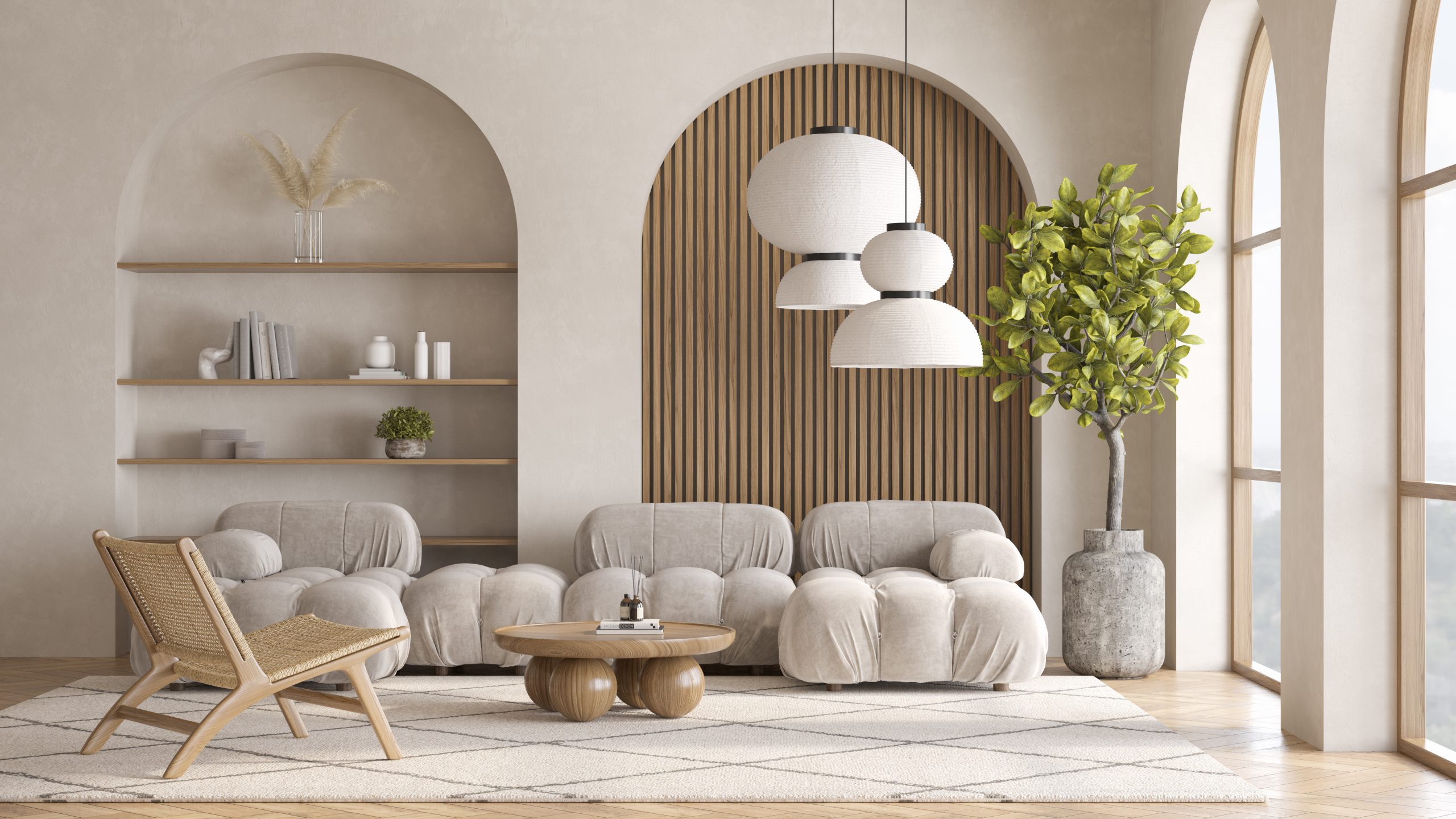
What Modern Interior Design Actually Is — And What It Isn’t
Let’s clear something up first, because “modern” gets used as a catch-all for basically any style that isn’t traditional, and that’s not accurate.
Modern interior design refers to a specific design lineage, rooted in the early-to-mid 20th century, that prioritizes clean lines, functional form, and a reduction of ornament. Think Bauhaus principles: form follows function, materials are honest about what they are, and decoration for decoration’s sake gets stripped away. It’s distinct from contemporary design (which just means “whatever’s current right now”) and from minimalism (which is more about restraint in quantity than a specific aesthetic lineage).
Here’s what modern design isn’t: it isn’t the absence of personality. It isn’t all-white everything. It isn’t a rule that says you can’t have a rug with pattern or a chair with curves. Those are common misapplications, not the actual philosophy. A lot of spaces that read as cold and uninviting aren’t failing because they’re too modern. They’re failing because someone confused “clean lines” with “no warmth allowed,” and stripped out everything that makes a room feel lived in.
The real philosophy is closer to this: every element earns its place. Nothing is there just to fill space, but what is there gets chosen with intention, including materials and textures that bring warmth. That’s the part that gets lost in translation most often.
The Five Elements of Modern Interior Design That Create Warmth
If clean lines are the skeleton of modern design, these five elements are what put flesh on it. Skip them, and you get a showroom. Include them, and you get a home.
1. Natural Wood — The Non-Negotiable Warmth Element
If there’s one material that does more work than any other to keep modern design from feeling cold, it’s wood. Not painted wood, not laminate that’s trying to look like wood from six feet away. Real wood, with visible grain and some variation in tone.
White oak has become something of a default in modern spaces for good reason: it’s light enough to stay airy, but the grain still reads as organic and warm against harder materials like steel, glass, or polished concrete. Walnut works the opposite direction, adding richness and depth in smaller doses, a dining table, a set of shelves, a piece of millwork.
The key is using wood as a counterweight to whatever’s geometric and hard-edged in the room. A steel-framed staircase feels sharp on its own. Pair the treads with a warm wood and suddenly it feels grounded instead of severe.
2. Textiles — Layered Without Clutter
This is where a lot of modern spaces go wrong. In an effort to keep things clean, people strip out textiles almost entirely, and that’s a mistake. Fabric absorbs sound, breaks up hard surfaces, and gives a room the kind of texture your hand wants to touch. A room with none of that reads as sterile no matter how good the layout is.
The trick in modern design is layering textiles without letting them turn into clutter. A wool throw in a single warm tone. A linen curtain that moves with the air instead of sitting stiff. A rug with texture (bouclé, a low-pile wool, something with visible weave) rather than pattern for pattern’s sake. Two or three well-chosen textile moments will do more for warmth than a dozen decorative pillows.
3. Indirect and Layered Lighting
A single overhead light fixture is the fastest way to make any room, modern or otherwise, feel like an office. Warmth in lighting comes from layering: ambient light that fills the space, task lighting where you actually need it, and accent lighting that creates pools of warmth in corners and against walls.
Modern design in particular benefits from hidden or integrated lighting, a light strip under a floating shelf, a recessed cove light along a ceiling edge, because it keeps the clean lines intact while still giving the room depth after dark. And always, always check the color temperature. Anything above 3000K starts reading cool and clinical. Warm white, in the 2700K to 3000K range, is what keeps a modern space feeling inviting once the sun goes down, which in Montreal winters is most of the day.
4. Warm Neutral Palette — Beyond Greige
Greige had its moment, and there’s nothing wrong with it, but a warm neutral palette has more range than one popular paint color. Think cream, warm white, soft taupe, sand, even a muted terracotta or clay tone used sparingly. These colors carry an undertone of warmth even in a room with minimal color variation overall.
The mistake to avoid is going too cool. A “neutral” palette that leans blue or gray-heavy will fight against every warm material you introduce, no matter how much good wood or textile work you layer in. Test paint colors in your actual space, under your actual light, before committing. Montreal’s grey winter light shows up undertones that don’t show at all in a sunny showroom.
5. Organic Form as Contrast to Geometric Structure
Clean lines are the backbone of modern design, but a room built entirely of straight lines and right angles reads as rigid fast. The fix isn’t to abandon the geometry. It’s to introduce a few organic, curved, or irregular forms as contrast.
A curved-arm sofa in an otherwise linear room. A ceramic vase with an irregular, hand-thrown shape sitting on a perfectly rectilinear shelf. A round mirror breaking up a wall of straight-edged cabinetry. These moments of organic form give the eye somewhere to rest, and they’re often what separates a room that feels intentionally modern from one that just feels stark.
Modern Interior Design Room by Room in a Montreal Home
Living room. This is usually where the five elements above come together most visibly. A wood coffee table, a warm-toned wool rug, layered lighting (a floor lamp, a couple of table lamps, maybe a picture light over art), and one or two organic pieces, a curved chair, a sculptural side table, keep it from feeling like a furniture catalog.
Kitchen. Modern Montreal kitchens tend to lean toward flat-panel cabinetry, which is where warmth needs to come from elsewhere. Wood open shelving, a warm-toned stone or butcher block countertop, and brass or unlacquered hardware that develops a patina over time all help. Avoid an all-white, all-hard-surface kitchen with no textural break; it’s the fastest way to end up with a cold, clinical result.
Bedroom. This room should lean warmer than anywhere else in the house. Layered bedding in natural fibers, a wood bed frame or headboard, warm and dimmable lighting on bedside tables. Skip the overhead light entirely if you can. Bedrooms rarely need one, and it’s almost always the least flattering light source in the house.
Bathroom. Modern bathrooms often go heavy on tile and glass, both cold materials by nature. Counter that with wood-look or actual wood vanities (sealed properly for humidity), warm-toned stone, and a mix of matte and warm metal finishes instead of an all-chrome, all-glossy look.
Modern Interior Design for Montreal’s Specific Housing Stock
Montreal’s housing stock has personality, and modern design here has to work with it rather than against it, or you end up with something that feels imported from a different city entirely.
Triplexes and duplexes. A huge share of Montreal’s residential buildings are these narrow, deep triplexes with rooms lined up front to back. That layout tends to mean limited natural light in the middle of the unit. Modern design’s tendency toward lighter palettes and reflective (but not glossy) surfaces actually helps here, bouncing available light further into the space. Layered lighting becomes less optional and more essential in these floor plans.
Existing mouldings and plaster details. Older Montreal homes often come with existing crown moulding, ceiling medallions, or plaster details that don’t disappear just because you want a modern interior. Rather than fighting these features or stripping them out entirely (which can be costly and sometimes structurally inadvisable), a lot of successful modern renovations here keep select original details and let them contrast intentionally against cleaner, more contemporary elements elsewhere in the room.
Winter light. Montreal gets genuinely dark winters, with short days and long stretches of grey sky. This affects every material and color decision in a way that a Pinterest board photographed in California light won’t prepare you for. Warm neutrals, warm-temperature lighting, and enough textile layering to keep a room feeling cozy through February aren’t just nice-to-haves here. They’re functional necessities.
Older building envelopes. A lot of Montreal’s older housing stock has real drafts, uneven walls, and mechanical systems that weren’t designed with modern renovation in mind. This matters for material choices (some finishes handle humidity and temperature swings better than others) and for planning, since opening up walls in an older triplex can turn up surprises that a newer build wouldn’t.
The Mistakes That Make Modern Design Feel Cold
All hard surfaces, no textiles. The number one culprit. A room with wood floors, stone counters, glass, and metal, and nothing soft anywhere, will feel like a hospital no matter how good the layout is.
Cool-toned everything. Cool whites, cool grays, cool-temperature lighting, all stacked together with no warm counterpoint anywhere. Each choice on its own might be fine. Stacked together, they compound into a space that feels uninviting.
Too much matching. Modern design done badly sometimes means every surface matches perfectly, same wood tone, same metal finish, same everything. Real warmth comes from slight variation: a wood tone that’s close but not identical to another wood tone in the room, metals that are mixed rather than uniform.
Skipping personal objects entirely. Books, art, plants, the things that make a home look like someone lives there rather than staged for a listing photo. Modern design doesn’t require a blank slate. It just asks that what’s displayed is chosen with some intention rather than left cluttered.
One light source doing all the work. Covered above, but it’s worth repeating because it’s the single most common lighting mistake. If your entire room relies on one ceiling fixture, no amount of good furniture will save it from feeling flat.
Conclusion
Modern design and warmth aren’t in conflict. They just require you to be deliberate about where the warmth comes from, since it isn’t going to show up by accident the way it might in a more traditional style packed with ornament.
Get the wood right, layer your textiles and lighting, keep the palette warm rather than cool, and let a few organic shapes soften the geometry. Do that consistently through a Montreal home, accounting for the light, the housing stock, and the season you’re actually designing for, and you end up with a space that’s unmistakably modern and still feels like somewhere you want to spend a Tuesday night in February.


 Home
HomeCONTACT US
1730 Boulevard de la Cité des Jeunes #11
Les Cèdres, Quebec, J7T 1K9
office@wihmrenovation.com
(450) 452-9990
RBQ# 5782-3676-01
All rights reserved WIHM DESIGN & CONSTRUCTION
Web design Twenty West Media